Project 04 · Team project · Inclusive design
Accessible Smart Storage for a Powered Wheelchair
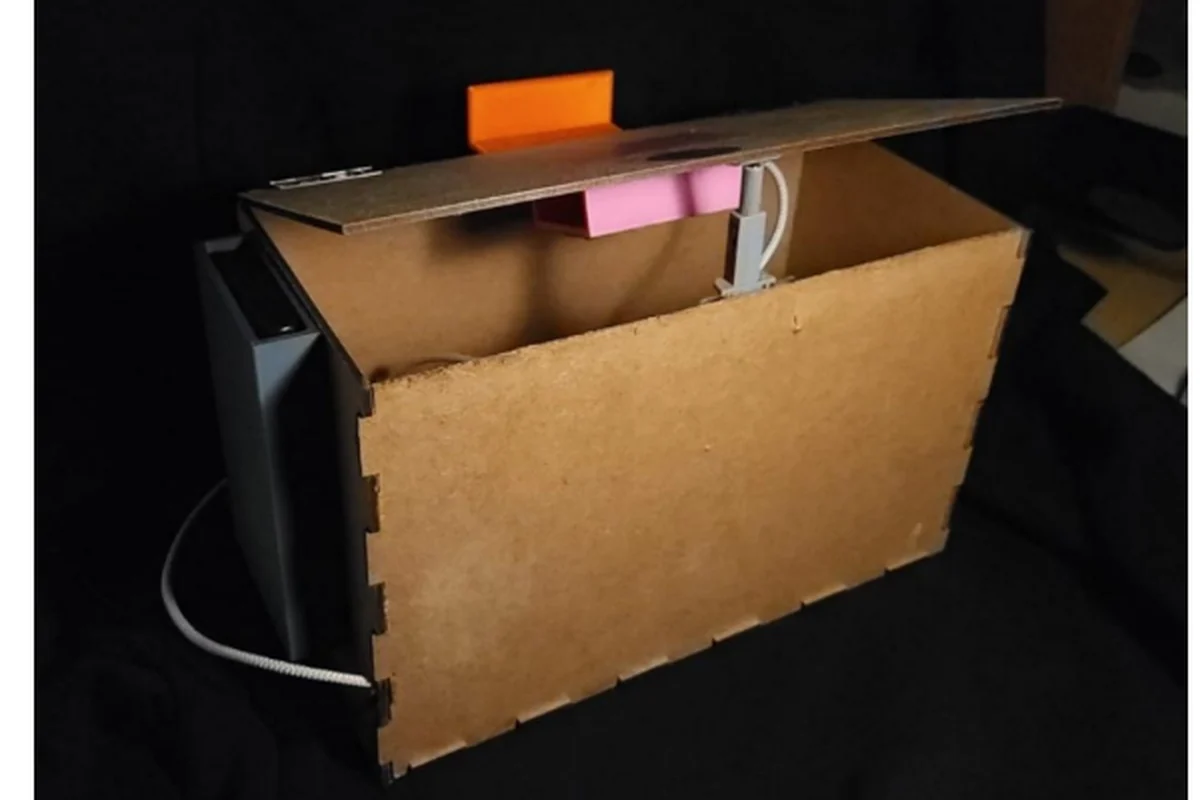
My team and I designed side-mounted storage for a power wheelchair user with limited reach and hand dexterity. The prototype provided 8.12 L of storage, and we measured a 10 cm access distance on the design. Our ratings came from a classroom sample—not tests with the intended user.
- Role
- Coordinator + subsystem design
- Physical design
- 8.12 L · 10 cm design reach measurement
At a glance
The accessibility problem, my part, and the prototype result.
The problem
We set out to design secure, reachable storage for a power wheelchair user with limited hand dexterity. Opening the enclosure, charging a phone, and retrieving small items could not depend on precise finger control.
My contribution
As coordinator, I helped narrow an overly broad pressure-sensing concept, revised and presented the test plan to the teaching assistant, and tracked the resulting action items. I designed the sliding wireless-charging phone holder and removable battery holder, researched a compact layout for the ESP32, displays, and charging components, helped laser-cut the enclosure and 3D-print my parts, and contributed the rounded interior corners.
Documented result
We built a six-panel laser-cut wooden enclosure with 8.12 L of usable volume and recorded a 10 cm design reach measurement. Because we did not mount the prototype on the intended wheelchair, the 10 cm figure does not represent a measurement of the user’s actual reach. Our report contains two partially overlapping classroom rating tables, each with 10 responses, averaging 4.7/5 for retrieval and 4.6/5 for feature accessibility.
01 / Scope
Narrow the scope before building
A decision matrix scored the push-latch storage concept at 21 points and an assistive hinge-opening tool at 19, based on cost, features, build feasibility, practical function, and creativity. We moved the selected enclosure from a scaled 3D-printed study to a full-size wooden build.
02 / My work
Make each interface usable with limited dexterity
I designed the sliding holder to align the selected phone with the wireless charger and leave a side gap for a two-finger lift. I made the battery holder removable to reduce the precision needed for removal and reinsertion, and I contributed rounded corners to reduce item trapping. Our final enclosure also used a forearm-operated push latch and a four-degree interior slope.
After our research found no compatible USB-C charger and controller combination among the investigated parts, we dropped phone-detection logic and powered the controller and charger separately. We chose the simpler architecture because it better matched our feasibility, cost, weight, and packaging constraints.
03 / Evidence
Use testing to revise the prototype
We used design reviews and bench tests to add a shallower slope, rounded corners, metal hinges, a lid-rest bar, a resized phone holder, and a sliding-bottom battery enclosure. In our uncounted checks, the latch operated and the enclosure stayed stable; resizing and securing the phone holder improved fit.
We did not record a latch-cycle count, a phone-placement success rate, or a charging success rate. Our ratings came from a classroom convenience sample that included classmates and team members, and we did not test long-term latch or hinge durability.
Tools & technologies
- CAD
- Laser cutting
- 3D printing
- Wireless charging
- ESP32/OLED · team integration
- Classroom usability testing